SHARE TO YOUR FRIEND

Showing posts with label Climate Change. Show all posts

5 shocking Impacts of climate change on agriculture that you do not know

How will climate change affect the agricultural sector and our ability to feed the world’s growing population?

Climate change and population
Climate Can not Wait

Feeding 9 billion or more people in mid-century and beyond in the face of a rapidly worsening climate is likely to prove the greatest challenge the human race has ever faced. 

We are looking at the perfect storm of impacts. Dust-bowl conditions are projected to become the norm for large areas in both food-importing and food-exporting countries. 

This will be happening during a time when we will have drained many of the key aquifers that sustain agriculture in countries as diverse as India, China, and the United States. 

In addition, the glaciers that act as reservoirs for major river systems will be shrinking and vanishing, further reducing water availability during the crucial summer season for crops.

In this article, you will be learning about Joseph Romm's view of the impact of 

  1. Climate change and population
  2. Climate change effects on agriculture
  3. Climate change and people
  4. Climate change Adaptation
  5. Climate change Vulnerability


Climate Change and Population


Every part of the world will be routinely hit by extreme deluges, floods, droughts, and heat waves that damage crops. At the same time, saltwater intrusion from sea level rise threatens some of the richest agricultural deltas in the world, such as those of the Nile and the Ganges. 
Climate change and population

Meanwhile, ocean acidification combined with ocean warming and overfishing may severely deplete the food available from the sea. 

On the demand side, the United Nations Food and Agricultural Organization estimates that some 800 million people are chronically undernourished. 

In the coming decades, we will be adding another billion mouths to feed, then another billion and by most projections, another billion, taking us to 10 billion. At the same time, many hundreds of millions of people around the world will be entering the middle class, and, if they are anything like their predecessors around the globe, they will be switching from a mostly grain-based diet to a more meat-based one, which can require 10 times as much acreage and water per calorie delivered. 


Climate change effects on agriculture

Climate change effects on agriculture
Climate change and Food
The World Bank issued an unprecedented warning about the threat to global food supplies in a 2012 report, “Turn Down the Heat: Why a 4°C Warmer World Must be Avoided.”

The Bank noted that the latest science was “much less optimistic” than what had been reported in the Intergovernmental Panel on Climate Change’s 2007 Fourth Assessment report


Climate Change’s  Fourth Assessment report:

These results suggest instead a rapidly rising risk of crop yield reductions as the world warms. Large negative effects have been observed at high and extreme temperatures in several regions including India, Africa, the United States, and Australia. For example, significant nonlinear effects have been observed in the United States for local daily temperatures increasing to 29°C for corn and 30°C for soybeans. These new results and observations indicate a significant risk of high-temperature thresholds being crossed that could substantially undermine food security globally in a 4°C world.

And that’s just temperature rise: “Compounding these risks is the adverse effect of projected sea-level rise on agriculture in important low-lying delta areas.” Moreover, we have the threat to seafood of ocean acidification. Finally, we have Dust-Bowlification:


The report also says drought-affected areas would increase from 15.4% of global cropland today, to around 44% by 2100. The most severely affected regions in the next 30 to 90 years will likely be in southern Africa, the United States, southern Europe and Southeast Asia, says the report. In Africa, the report predicts 35% of cropland will become unsuitable for cultivation in a 5°C world.

Climate Change and People


What is some of the underlying science behind these conclusions? Using a “middle of the road” greenhouse gas emissions scenario, a study in Science found that for the more than five billion people who will be living in the tropics and subtropics by 2100, growing-season temperatures “will exceed the most extreme seasonal temperatures recorded from 1900 to 2006.”

The authors of “Historical Warnings of Future Food Insecurity with Unprecedented Seasonal Heat” conclude that “Half of the world’s population could face climate-driven food crisis by 2100.”

 A study led by MIT economists found that “the median poor country’s income will be about 50% lower than it would be had there been no climate change.” 

That finding was based on a 3°C warming by 2100, which is much less than the warming we are currently on track to reach. 


Climate Change Adaptation

Climate Change Adaptation

A further study led by NOAA(National Oceanic and Atmospheric Administration) scientists found that several regions would see rainfall reductions “comparable to those of the Dust Bowl era.”

 Worse, unlike the Dust Bowl, which lasted about a decade at its worst, this climate change would be “largely irreversible for 1,000 years after emissions stop.”

In other words, some of the most arable land in the world would simply turn to desert. In Joseph Romm's Nature article, “The Next Dust Bowl,” I  wrote, “Human adaptation to prolonged, extreme drought is difficult or impossible. Historically, the primary adaptation to dust-Bowlification has been abandonment; the very word ‘desert’ comes from the Latin desertum for ‘an abandoned place’.” During the relatively short-lived U.S. Dust Bowl era, some 2.5 million people moved out of the Great Plains.

However, now we are looking at multiple, long-lived droughts and steadily growing areas of essentially nonarable land in the heart of densely populated countries and global breadbaskets.

In a 2014 study, “Global warming and 21st-century drying,” the authors concluded, “An increase in evaporative drying means that . . . important wheat, corn and rice belts in the western United States and southeastern China, will be at risk of drought.” 

The study’s lead author, Dr Benjamin Cook, a top drought expert with joint appointments at NASA and Columbia, explained to me that we are headed into a “fundamental shift in Western hydro-climate.” This drying includes the agriculturally rich Central Plains.


Climate Change and Food Security


The study warns that droughts in the region post-2050 “could be drier and longer than drought conditions seen in those regions in the last 1,000 years.” Given how rapidly growing the population of the West is, Joseph Romm asked him whether there would be enough water for everyone there. He said “we can do it,” but only “if you take agriculture out of the equation.” 

However, that, of course, is not an option. Columbia University’s Lamont-Doherty Earth Observatory further notes that “while bad weather periodically lowers crop yields in some places, other regions are typically able to compensate to avert food shortages.

In the warmer weather of the future, however, crops in multiple regions could wither simultaneously.” That would make food-price shocks “far more common,” according to climatologist and study co-author Richard Seager. 

The international aid and development organization Oxfam has projected that global warming and extreme weather will combine to create devastating food price shocks in the coming decades. They concluded that wheat prices could increase by 200% by 2030 and corn prices could increase a remarkable 500% by 2030.

Climate Change Vulnerability


In 2014, the IPCC(Intergovernmental Panel on Climate Change) warned that humanity is risking a “breakdown of food systems linked to warming, drought, flooding, and precipitation variability and extremes.” 

This was a key conclusion from its summary of what the scientific literature says about “Impacts, Adaptation, and Vulnerability,” which every member government-approved line by line. 

The IPCC pointed out that in recent years, “several periods of rapid food and cereal price increases following climate extremes in key producing regions indicate a sensitivity of current markets to climate extremes among other factors.” 

So warming-driven drought and extreme weather have already begun to reduce food security.  If we jump to a more heavily populated and climate-ravaged future, the IPCC warns that climate change will “prolong existing, and create new, poverty traps, the latter particularly in urban areas and emerging hotspots of hunger.” 


Climate Change Finalised


You might think the question of the future of agriculture under high levels of warming would be something that has been well studied because of the importance of feeding so many people in a globally warmed world. However, the IPCC notes that “Relatively few studies have considered impacts on cropping systems for scenarios where global mean temperatures increase by 4°C [7°F] or more.” 

Even though humanity is currently headed towards 4°C [7°F] and beyond, we do not have a very good scientific picture of the full impact such climate change will have on agriculture and food supplies. The IPCC does mention briefly that our current path of unrestricted carbon emissions (the RCP8.5 scenario) holds unique risks for food supplies:


“By 2100 for the high-emission scenario RCP8.5, the combination of high temperature and humidity in some areas for parts of the year is projected to compromise normal human activities, including growing food or working outdoors.” 

If we warm anywhere near that much—some 4°C [7°F] or more—the challenge of feeding 9 billion people or more will become exponentially harder.

Resources: Climate change Assesment Report, Joseph Romm|  Climate Change what everyone needs to know, The Changes everything.


Climate Change moves Aussie Mammal to Extinct list

Aussie Mammal the first

 'Climate Change Extinction'

Aussie mammal the first ‘climate change extinction'

Australia officially declared a Great Barrier Reef rodent extinct on Tuesday, Bramble Cay Melomys was generally known as Aussie Mammal, making it the first mammal believed to have been killed off by human-induced climate change.

The Melomys rubicola considered the Great Barrier Reef's only endemic (found nowhere else) mammal species, whose only known habitat was a small sandy island in far northern Australia was first discovered on the cay in 1845 by Europeans who shot the "large rats" for sport.


Ocean Inundation in Australian Reef

First Climate Change Extinction:

But the last known sighting, by a professional fisherman, was in 2009. It has not been spotted in a decade.
When a 2014 study found no sign of the species, researchers decided to conduct the most extensive survey possible in the hope of conserving the species.
Researchers from Queensland determined a key factor in its disappearance was “almost certainly” repeated ocean inundation (Flood of water due to sea level rise) of the cay — a low-lying island on a coral reef — over the last decade, which had resulted in dramatic habitat loss.
Australia’s environment ministry on Tuesday said it had officially transferred the animal to the “extinct” list.


Climate change pushes Aussie mammal to Extinct list

Available data on sea-level rise and weather events in the Torres Strait region “point to human-induced climate change being the root cause of the loss of the Bramble Cay melomys”, a study released in 2016 said.


In a warming world, why do some winters still seem unusually severe?

In a warming world, why do some winters still seem unusually severe? 

Climate Change and Cold Winters
 The world’s leading scientists and governments have concluded, “Warming of the climate system is unequivocal” and a “settled fact,”. 

Yet anyone who lives in the East Coast of the United States or in various sections of Europe knows that winters seem as severe as ever. 

We still have record-setting snowstorms and still set records for cold temperatures in different places. There are several reasons why this occurs in a warming world. 

Climate Change and Extreme Winters
Abnormal Weather
First, many people, especially in the northern latitudes, view massive snowstorms or blizzards as iconic indicators of a severe winter. 

CLIMATE CHANGE IS REAL

In addition, because global warming means more water vapour in the atmosphere available for precipitation, climate science actually projects that most extreme snowstorms are going to get worse in a great many northern locations for the perceivable future. 

That may seem counterintuitive, but that is one goal of science, to keep our intuition from leading us astray. 


What is the difference between Climate Change and Global Warming


Second, the world has warmed approximately 1.4°F since 1950. That does not mean the end of winter or the end of record daily low temperatures. It is still going to be much, much colder on average in January than July. 

As for daily temperature fluctuations, they are so large at the local level that we will be seeing daily cold records—lowest daily minimum temperature and lowest daily maximum temperature—for a long, long time. 

That is why climatologists prefer to look at the statistical aggregation across the country over an extended period of time because it gets us beyond the oft-repeated point that you cannot pin any one single, local temperature record on global warming. 


In 2009, the U.S. National Center for Atmospheric Research explained, “Record High Temperatures Far Outpace Record Lows Across U.S.”: Spurred by a warming climate, daily record high temperatures occurred twice as often as record lows over the last decade across the continental United States, new research shows. The ratio of record highs to lows is likely to increase dramatically in coming decades if emissions of greenhouse gases continue to climb.

Things you need to know about climate change, Scientists and Human activities

The NCAR study looked at millions of daily high and low- temperature readings are taken over 60 years at some 1,800 U.S. weather stations. It pointed out “If temperatures were not warming, the number of record daily highs and lows being set each year would be approximately even.” 

Back in the 1960s and 1970s, there were actually “slightly more record daily lows than highs.” However, in the 1980s, 1990s, and 2000s, “record highs have increasingly predominated, with the ratio now about two-to-one for the 48 states as a whole.” 

Climate Change and Cold Waves

Since that study, the ratio has increased further. Therefore, we can expect that for the foreseeable future, locations in the United States and around the world will still routinely see daily low-temperature records set; however, overall, there will be many more high-temperature records set. 

Third, our perception of a cold winter is relative. As the globe warms, we will tend to think of mild winters as the norm. When we do get a cool winter, it will, relative to recent experience, seem unusually cold. This is sometimes called the phenomenon of “shifting baselines.” Readers who are younger than 30 years old have never lived through a single month in which the planet’s average surface temperature was below average.

Climate Change and Oceans

What is the difference between Climate Change and Global Warming

Climate Change Vs Global Warming

Global warming generally refers to the observed warming of the planet due to human-caused greenhouse gas emissions. 

Climate change generally refers to all of the various long-term changes in our climate, including sea level rise, extreme weather, and ocean acidification. 

In 1896, a Swedish scientist, Svante Arrhenius, concluded that if we double atmospheric CO2 levels to 560 ppm (from preindustrial levels of 280), then surface temperature levels would rise several degrees. 

The first published use of the term “global warming” appears to have been in 1975 by the climatologist Wallace Broecker in an article in the journal Science titled, “Climatic Change: Are We on the Brink of a Pronounced Global Warming?” 

In June 1988, global warming became the more popular term after NASA scientist James Hansen told Congress in a widely publicized hearing that “Global warming has reached a level such that we can ascribe with a high degree of confidence a cause and effect relationship between the greenhouse effect and the observed warming.” 

The term “climate change” dates at least as far back as 1939. A closely related term, “climatic change,” was also common, as in the 1955 scientific article, “The Carbon Dioxide Theory of Climatic Change” by Gilbert Plass. 

By 1970, the journal Proceedings of the National Academy of Sciences published a paper titled “Carbon Dioxide and its Role in Climate Change.” 


Carbon Emission- TechVee
Carbon Emission

When the world’s major governments set up an advisory body in 1988 of top scientists and other climate experts to review the scientific literature every few years, they named it the “Intergovernmental Panel on Climate Change.” 
Climate change or global climate change is generally considered a “more scientifically accurate term,” than global warming, as NASA explained in 2008, in part because “Changes to precipitation patterns and sea level are likely to have a much greater human impact than the higher temperatures alone.” 

When you consider all of the impacts scientists have observed in recent decades—including the acidifying ocean, worsening wildfires, and more intense deluges—climate scientists are likely to continue favouring the term climate change. 

In general or popular usage, global warming and climate change have become interchangeable over the past several decades, and that trend is likely to continue this century, especially as the warming itself becomes more and more prominent.


Things you need to know about climate change, Scientists and Human activities

How do scientists know that recent climate change is primarily caused by human activities?


Scientists have such high confidence that human activity is the primary driver of recent warming because of several converging lines of evidence, all pointing in the same direction. 

These include “an understanding of basic physics, comparing observations with models, and fingerprinting the detailed patterns of climate change caused by different human and natural influences,” as stated in a 2018 report by the U.S. National Academy of Sciences and British Royal Society. 

For instance, we have observed a 40% rise in CO2 levels since the dawn of the industrial age in the mid-1700s, from 280 parts per million (ppm) in the air to approximately 410 ppm now. 


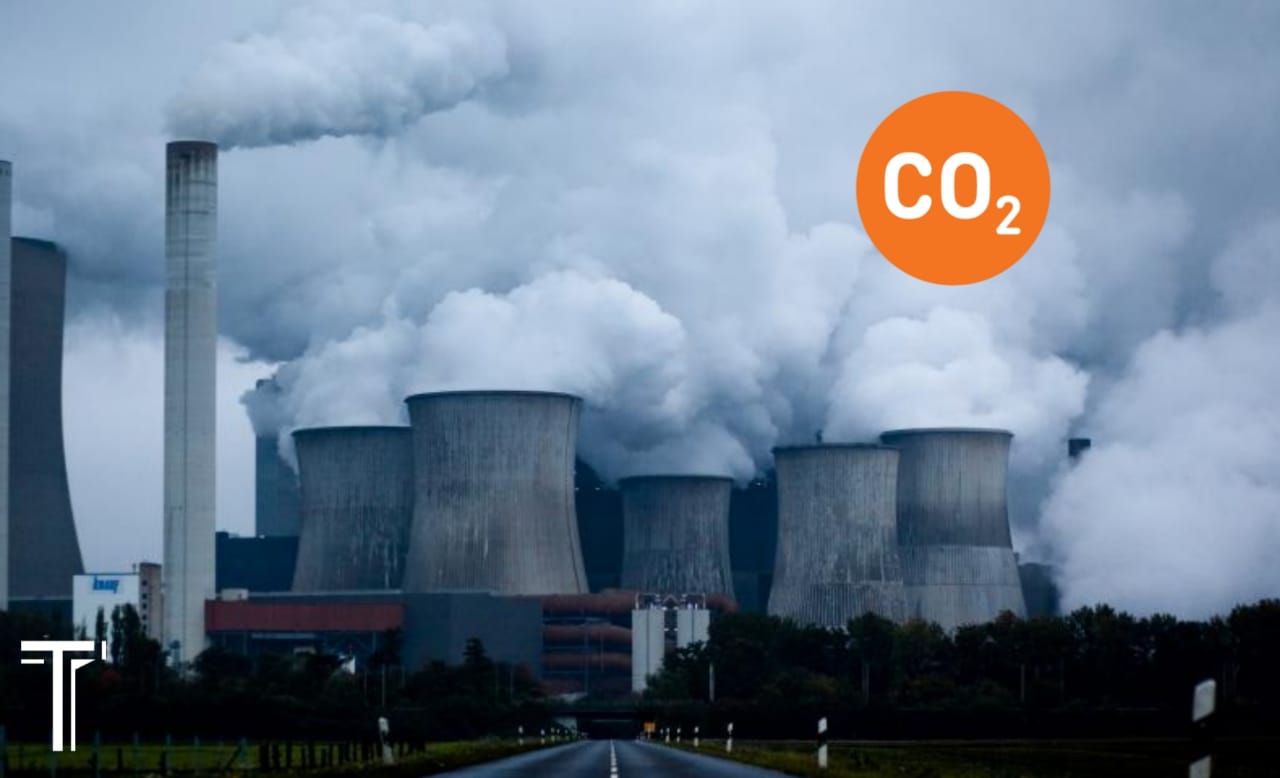
CO2 Emission is a major Cause for Climate Change
CO2 Emission - Climate Change is Real 

In 1970, CO2 levels were around 325 ppm, which means that most of the rise in CO2 from preindustrial levels has occurred in the last four decades, matching a time of rapid growth in industrial energy use and CO2 emissions. 

In addition, the amount of total warming the planet has experienced since 1900 is inconsistent with the temperature change you would expect just from the observed natural changes, such as volcanic emissions and the decrease in solar radiation. 

In fact, as noted, absent human-caused greenhouse gases, we would expect the Earth to be in a period of global cooling right now. 

It is only by including all of the human activity, factoring in all of the greenhouse gases emitted by fossil fuel consumption, that we see consistency between observed temperature change and basic physics calculations. 

There are numerous other “human fingerprints” on the pattern of climate changes we have observed in recent decades. 

When scientists have specifically measured the type of carbon (the particular ratio of carbon isotopes) building up in our atmosphere, most of it is exactly the type that scientists know comes from the combustion of fossil fuels, as opposed to other sources, such as deforestation, which plays a much smaller role.  


Climate Change is Real
Graph on Temperature Rise


The U.S. National Academy and United Kingdom’s Royal Society note: “The observed patterns of surface warming, temperature changes through the atmosphere, increases in ocean heat content, increases in atmospheric moisture, sea level rise, and increased melting of land and sea ice also match the patterns scientists expect to see due to rising levels of CO2 and other human-induced changes.” 

In particular, climate science predicts that if the warming is caused by an increase in greenhouse gases, we expect the lower atmosphere (troposphere) to warm, the upper atmosphere (stratosphere) to cool, and the boundary between them (tropopause) to rise. 

All of this has been observed. If, for instance, recent warming were due to increases in the intensity of radiation from the sun, then in addition to the troposphere, the stratosphere should be warming, too, which is not happening.


What connects the greenhouse gases with warming? 


The website Skeptical Science summarizes the research findings:

  • Satellites measure less heat escaping out to space, at the particular wavelengths that CO2 absorbs heat, thus finding “direct experimental evidence for a significant increase in the Earth’s greenhouse effect.” 
  • If less heat is escaping to space, where is it going? It’s going back to the Earth’s surface. Surface measurements confirm this, observing more downward infrared radiation. A closer look at the downward radiation finds more heat returning at CO2 wavelengths, leading to the conclusion that “this experimental data should effectively end the argument by sceptics that no experimental evidence exists for the connection between greenhouse gas increases in the atmosphere and global warming.” 

Climate change is real?


Climate Change is Real
Click the Above Image

So we know it is humanity burning fossil fuels that are raising CO2 levels. In addition, we know that this increased CO2 is trapping heat precisely in the manner climatologists had long predicted. 

Moreover, we know the pattern of impacts from this warming are precisely what climate scientists predicted. 

Finally, the confidence scientists have does not just come from the fact that every aspect of climate change in recent decades fits the precise pattern predicted from climate science for increases in human-caused greenhouse gases. 

At the same time, no alternative theory has ever been presented that can account for all of the observations. 

Moreover, such an alternative theory would not merely have to provide a mechanism to account for the warming and other observed changes, it would also have to come up with another as-yet-unknown mechanism that was somehow negating the warming that science has long predicted from human-caused greenhouse gases.

Also, Read How Climate change affects the colour of our Oceans.

CLIMATE CHANGE AND OCEANS

CLIMATE CHANGE COULD TURN THE OCEANS BLUER

Warming is causing significant changes to Phytoplankton in the oceans, and over the coming decades it will intensify the blue and green regions of the water bodies.

CLIMATE CHANGE AND OCEAN

Much of the surface ocean will shift in colour by end of the 21st century

More than 50% of the world's oceans will shift in colour due to climate change by the year 2100, a  Massachusetts Institute of Technology(MIT) study has found. 

Climate change is causing significant changes to phytoplankton in the world's oceans, and over the coming decades, these changes will affect the ocean's colour, intensifying its blue regions and its green ones, according to the study published in the journal Nature Communication. 

Researchers report that they have developed a global model that simulates the growth and interaction of different species of phytoplankton, or algae, and how the mix of species in various locations will change as temperatures rise around the world.


Image: NASA Earth Observatory

The researchers also simulated the way phytoplankton absorb and reflect light, and how the ocean’s colour changes as global warming affects the makeup of phytoplankton communities.

Satellites should detect these changes in hue, providing early warning of wide-scale changes to the marine ecosystem, said researches at Massachusetts Institute of Technology(MIT) in the US.

The study suggests that blue colour regions, such as subtropics, will become even more blue, reflecting even less and life in general in those waters, compared with today, such as near the poles, may turn even deeper green, as warmer temperature brew up larger blooms of more diverse phytoplankton.

Reason For change in colour


The ocean's colour depends on how sunlight interacts with whatever it is in the water. Water molecules alone absorb almost all sunlight except for the blue part of the spectrum, which is reflected
back out, researchers said.


Things you need to know about climate change, Scientists and Human activities


This time around, the researchers added a new element to the model, that has not been included in other ocean modelling techniques: the ability to estimate the specific wavelengths of light that are absorbed and reflected by the ocean, depending on the amount and type of organisms in a given region.


Phytoplankton
Phytoplankton

“Sunlight will come into the ocean, and anything that’s in the ocean will absorb it, like chlorophyll,” Researches says. “Other things will absorb or scatter it, like something with a hard shell. So it’s a complicated process, how light is reflected back out of the ocean to give it its colour.”

Relatively barren open-ocean regions appear as deep blue from space. If there are any organisms in the ocean, they can absorb and reflect a different wavelength of light, depending on their individual properties.


Do you Believe Climate Change is real? Cast your opinion here.


According to their model, climate change is already changing the makeup of phytoplankton, and by extension, the colour of the oceans. By the end of the century, our blue planet may look visibly altered.

“There will be a noticeable difference in the colour of 50 per-cent of the ocean by the end of the 21st century,” Researchers says. “It could be potentially quite serious. Different types of phytoplankton absorb light differently, and if climate change shifts one community of phytoplankton to another, that will also change the types of food webs they can support. “


CLIMATE CHANGE IS REAL


This research was supported, in part, by NASA and the Department of Energy.


Post Credit: Press Trust India, MIT

CLIMATE CHANGE IS REAL


      THE CHANGE IN CLIMATE IS REAL

“Clean air, water, and a livable climate are inalienable human rights. And solving this crisis is not a question of politics it is a question of our own survival.”
 LEONARDO DICAPRIO
U.N. Messenger of Peace for the Climate

Climate change is coming much much faster. We have seen such an extraordinarily extreme weather patterns. If u consider in this vast universe, our planet earth is just a small boat. If this boat is sinking then we are all sinking with it together.


CLIMATE CHANGE IS REAL

We live in a world of an imminent threat which we created ourselves. We cannot control Nature, yet we have been disturbing its balance for centuries in the name of advancements. 

Climate change is one real threat that is happening, in fact growing exponentially as we breathe. Climate change is a slow phenomenon that causes an abnormal change in the Climate and Weather patterns, which is the greatest threat to a sustainable future. 


Climate Change is beyond our control


The Climate change started way before a century, but the difference now is we are knowingly doing this. 

It's just on a much larger scale. If we are going to fight climate change effectively, we have to start by acknowledging that most of our economy is based on fossil fuels. Fossil fuels are coal, oil, and natural gas.


Oil powers most of the transportation sector, coal and natural gas power most of the electricity. 


Now, in the first couple decades of the twenty-first century, in order to sustain our dependence on fossil fuels, we're going to very risky, very extreme new sources. 


You see machines in things like mountain top removal for coal, fracking for natural gas, offshore drilling for oil, and the tar sands, which is the most devastating form of producing fossil fuels. 


They take away massive forests, the water in the streams and rivers is poisoned. It has severe impacts on the wildlife, on native communities, and it requires a huge amount of energy simply to get it to our fuel tanks. 


There is no such thing as clean fossil fuel.


FOSSIL FUEL EXTRACTION METHODS
Fossil Fuel Extraction methods

All our modes of transportation, boats, trains, planes, cars, the way we produce our food, the way we build our cities, almost everything we do releases carbon dioxide, CO2, and that leads to climate change. 


The polar ice caps will melt, the seas will start to rise, there will be more dangerous weather patterns, floods, droughts, wildfires. 


This may sound like some nightmarish science fiction film. Except everything is real and it's happening right now.

Leonardo Dicaprio, U.N Messenger of Peace for Climate has made a Trip in the year 2016 to various countries to encounter how far we have damaged our Planet.


The northern tip of Baffin Island, one of the hundreds of islands in the High Canadian Arctic.


EFFECT OF CLIMATE CHANGE IN BAFFIN ISLAND
Effect of Climate Change on Northern Tip of Baffin Island 

Much faster than before 2040, we will be able to sail over the North Pole. There's going to be no sea ice left in the Arctic Ocean.

We are burning so many fossil fuels that the ice is melting. The Arctic is like the air conditioning for the Northern Hemisphere. 


If it goes away, that's going to change currents, that's going to change weather patterns, that's going to make floods and droughts more catastrophic. 


It's the most dramatic transformation of a large environment ever.


There are about 10,000 to 12,000 narwhals in this region. The numbers are stable here, in other regions are declining. I personally do not want to be on a planet without these animals.


Greenland

EFFECT OF CLIMATE CHANGE IN GREENLAND
Effect of Climate Change in Greenland

If climate stays at this temperature that it's been in the last decade, Greenland is,  going away. This meltwater is making its way to the sea. 

If that's not balanced by snowfall then the ice sheet gets smaller and sea level rises. 30 Feet is the thickness of ice that has melted throughout all of lower Greenland in the past 5 years. 


That's hundreds of cubic kilometres of ice that's now no longer stored on land. It's gone into the sea over here. 


Miami, New Orleans, Boston, and Long Beach, California may be doomed to fall victim to ever-rising sea levels. 


South Florida as we know it could be washed away by risings seas. When you look at places that are the most susceptible to sea level rise, especially in the United States, Florida is the key one.


One sort of picture of what the world may look like if we do not take action.


To begin with, for the past twelve thousand years, temperatures are almost miraculously stable. 

In fact, average temperatures vary within only plus minus one degrees Celsius during this entire period. This perfect planet with this perfect atmosphere. 


Yeah. Exactly. And so, let us then move upwards in temperature. 


DEFORESTATION FOR COAL MINING
Deforestation for Coal Mining 

Where are we right now? Well, today we're approaching one degree Celsius. Already it just, 0.85 degrees, we're seeing faster than predicted impacts. 


This storm is so big, so vast, 60 million Americans will feel its power. We're in a historic drought. The world's coral reefs begin to collapse even before two degrees. 


And we're predicted to hit 1.5, to 2 degrees. So, that's already probably gonna happen.  At 3, 4 degrees, we will have heat waves which make many regions in the world not livable any longer. 


Agriculture will be collapsing around the equator. That would take us beyond being able to responsibly feed humanity.


EFFECTS OF CLIMATE CHANGE
Effects of Climate Change

What makes scientists so nervous is that we can reach a point where earth takes over and starts reinforcing warming. This is what we call tipping points, and the most obvious one is Greenland. 


Greenland, for the first time, is melting on its entire surface to a point where, instead of being a white surface, becomes a dark surface, and suddenly instead of becoming cooler, becomes a self-heater. 


Because, because of the fact the ice can no longer reflect back because of the color change of the ice. 


Suddenly, all these feedbacks start kicking in. Methane stuck under frozen permafrost thaws to a point where it starts getting released. And that, in turn, warms the planet even more, which releases more methane. 


What are you going to do about Climate Change?


We have achieved the Paris Agreement. More countries have come together here to sign this agreement today than for any other cause in the history of humankind, and that is the reason for hope. 

But unfortunately, the evidence shows us that it will not be enough. A massive change is required right now. 


One that leads to a new collective consciousness.  New collective evolution of the human race, inspired and enabled by a sense of urgency from all of you. 


We can congratulate each other today, but it will mean absolutely nothing if you return to your countries and fail to push beyond the promises of this historic agreement. 


After 21 years of debates and conferences, it is time to declare no more talk, no more excuses, no more ten-year studies, no more allowing the fossil fuel companies to manipulate and dictate the science and policies that affect our future. 


The world is now watching. You'll either be lauded by future generations or vilified by them. You are the last best hope of Earth. We ask you to protect it, or we and all living things we cherish will be history.


Also Read:

  1. CLIMATE CHANGE AND OCEANS
  2. Things you need to know about climate change, Scientists and Human activities
  3. What is the difference between Climate Change and Global Warming

https://goo.gl/forms/mu90IxBWqPwRe2cw1


Click the above image and show your support to fight Climate Change. Thank You!


Featured post

Top 20 Most Innovative Products of 2019

Product Revolution Clear Audio Concept –   The ideal combination of simple yet highly intuitive design and top-grade sound, the Cl...